
Why Are Stainless Steel Kitchen Sinks Still So Popular in Dallas-Fort Worth?
Stainless steel kitchen sinks remain a popular choice for Dallas-Fort Worth homeowners because they combine durability, affordability, easy maintenance, and timeless style. Their resistance to heat, corrosion, and everyday wear makes them practical for busy kitchens. Stainless steel sinks also complement granite, quartz, and marble countertops, making them a versatile option for kitchen renovations throughout DFW.
When planning a kitchen renovation, choosing the right sink is just as important as selecting beautiful countertops. At Moreno Granite, we understand how these elements work together to create a kitchen that looks incredible and functions efficiently.
Serving homeowners throughout Dallas-Fort Worth, our team specializes in quality countertop fabrication and installation, helping customers create spaces that reflect their style and everyday needs. Whether you’re remodeling a kitchen in Plano, updating a home in Frisco, or building a new home in Garland, selecting the right sink can make a significant difference in your finished kitchen.
While trendy sink materials come and go, stainless steel continues to stand out for its practicality, versatility, and long-term value.
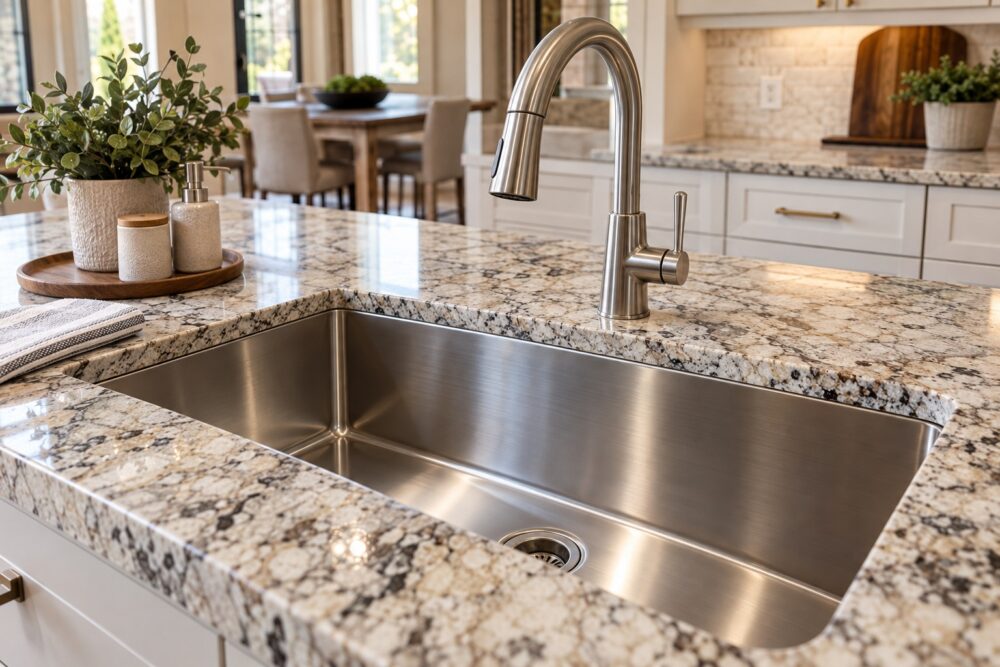
What Makes Stainless Steel Kitchen Sinks a Smart Choice for DFW Homes?
Stainless steel sinks offer an appealing combination of performance, appearance, and value. Unlike some alternative materials, stainless steel accommodates everyday kitchen activities without requiring complicated maintenance.
The material’s versatility also makes it suitable for everything from traditional Texas homes to contemporary kitchens with sleek stone countertops.
Here are five reasons stainless steel remains a favorite among homeowners.
1. How Durable Are Stainless Steel Kitchen Sinks?
Stainless steel sinks are highly durable and designed to withstand years of regular kitchen use.
Their resistance to heat, corrosion, and impact makes them particularly useful in households where cooking and entertaining are everyday activities.
Stainless steel offers several practical advantages:
- Heat resistance: Hot cookware and boiling water generally won’t damage the steel.
- Corrosion resistance: Quality stainless steel resists rust when properly maintained.
- Impact resistance: The material is less likely to chip or crack than certain ceramic sink materials.
- Long-term performance: Well-made sinks can provide decades of reliable service with appropriate care.
However, stainless steel isn’t completely damage-proof. Scratches can develop over time, and heavy impacts may dent thinner sinks.
For homeowners who frequently cook with large pots and pans, selecting a thicker stainless steel sink can provide additional protection.
2. Why Are Stainless Steel Sinks Easier to Maintain?
Stainless steel sinks are easy to clean because their smooth, nonporous surfaces resist absorbing liquids and food residue.
Unlike some natural materials, stainless steel doesn’t require periodic sealing.
Most everyday cleaning involves warm water, mild dish soap, and a soft cloth.
To maintain your sink’s appearance:
- Rinse away food particles after use.
- Clean regularly with mild soap and water.
- Avoid steel wool and harsh abrasive cleaners.
- Dry the surface to minimize water spots.
- Wipe in the direction of the brushed finish when possible.
Water spots deserve particular attention in North Texas, where mineral content varies between municipal water supplies.
Regular drying helps prevent mineral deposits from accumulating and keeps stainless steel looking its best.
Helpful tip: Avoid leaving bleach or chloride-based cleaning products on stainless steel surfaces because prolonged exposure can damage the protective finish.
3. Are Stainless Steel Sinks More Affordable Than Other Materials?
Stainless steel sinks are available across a wide range of price points, making them accessible for both budget-conscious renovations and luxury kitchen projects.
While premium stainless steel models can be expensive, homeowners can often find quality options at a lower cost than many specialty fireclay, copper, or natural stone sinks.
Several factors influence pricing:
- Steel thickness: Thicker sinks generally cost more.
- Sink dimensions: Larger basins often require more material.
- Installation style: Undermount and workstation designs may involve additional installation considerations.
- Soundproofing: Premium models frequently include noise-reducing pads.
- Accessories: Integrated cutting boards, drying racks, and bottom grids can increase costs.
According to Elkay’s Sink Buying Guide, 18-gauge stainless steel is a standard thickness for many American kitchen sinks, while 16-gauge steel offers additional thickness and resistance to denting.
For most residential kitchens, a quality 16-gauge or 18-gauge sink provides an excellent balance of performance and value.
4. Do Stainless Steel Sinks Look Good With Granite and Quartz Countertops?
Stainless steel sinks pair exceptionally well with granite, quartz, and marble because their neutral metallic finish complements a wide variety of countertop colors and patterns.
This versatility is particularly valuable when designing a kitchen intended to remain stylish for years.
Popular combinations include:
- White quartz countertops: Create a clean, bright, contemporary appearance.
- Black granite countertops: Provide a sophisticated contrast with stainless steel.
- Gray quartz countertops: Deliver a coordinated, modern aesthetic.
- Natural marble countertops: Balance elegant veining with practical functionality.
- Warm-toned granite countertops: Combine natural character with a neutral metallic accent.
Stainless steel also coordinates naturally with popular kitchen appliances.
According to the 2026 U.S. Houzz Kitchen Trends Study, 72% of renovating homeowners who updated appliances selected stainless steel finishes.
Although this statistic measures appliance finishes rather than sink materials, it highlights the continued popularity of stainless steel in kitchen design.
For Dallas-Fort Worth homeowners investing in beautiful stone countertops, a stainless steel sink provides a versatile finishing touch without competing with the countertop’s natural beauty.
5. What Type of Stainless Steel Sink Works Best With Stone Countertops?
Undermount stainless steel sinks are an excellent option for granite and quartz countertops because they create a streamlined appearance and simplify countertop cleanup.
Unlike traditional drop-in sinks, undermount models attach beneath the countertop, eliminating the raised rim around the sink opening.
This design allows homeowners to wipe crumbs and water directly from the countertop into the sink.
Other popular configurations include:
Single-bowl sinks: Ideal for washing large pots, baking sheets, and oversized cookware.
Double-bowl sinks: Convenient for separating food preparation from dishwashing.
Workstation sinks: Feature integrated ledges that accommodate accessories such as cutting boards and drying racks.
Drop-in sinks: Offer a traditional installation style that works with many countertop materials.
When choosing a sink, consider cabinet dimensions, countertop thickness, bowl depth, and plumbing requirements.
At Moreno Granite, we understand the importance of accurate countertop measurements and proper sink-opening preparation. Planning these details before fabrication helps create a polished, functional finished kitchen.
Why Stainless Steel Remains a Timeless Kitchen Design Choice
Kitchen design trends evolve, but homeowners consistently prioritize functionality, durability, and attractive finishes.
The 2026 U.S. Houzz Kitchen Trends Study found that 85% of surveyed renovating homeowners upgraded their kitchen sinks.
This demonstrates how important sink selection remains during kitchen remodeling projects.
Stainless steel continues to appeal to homeowners because it works across numerous design styles without sacrificing everyday practicality.
For busy Dallas-Fort Worth households, that combination makes stainless steel a dependable choice.
Whether you’re preparing family dinners, entertaining guests, or simply keeping up with everyday dishes, a well-selected stainless steel sink can provide lasting convenience.
Frequently Asked Questions About Stainless Steel Kitchen Sinks
Do stainless steel kitchen sinks scratch easily?
Stainless steel sinks can develop surface scratches from cookware, utensils, and abrasive cleaning products. Brushed finishes help make minor scratches less noticeable, while protective sink grids can reduce everyday wear.
What gauge stainless steel sink is best for a kitchen?
Both 16-gauge and 18-gauge stainless steel sinks are excellent residential options. Sixteen-gauge steel is thicker and offers greater dent resistance, while 18-gauge steel provides dependable durability at a typically lower price.
Are stainless steel sinks better than granite composite sinks?
Stainless steel sinks offer excellent heat resistance, affordability, and design versatility. Granite composite sinks provide additional color options and often offer better natural sound absorption, so the best choice depends on your priorities.
How long does a stainless steel kitchen sink last?
A quality stainless steel kitchen sink can last 15 to 30 years or longer with proper maintenance. Actual longevity depends on steel quality, installation, cleaning habits, and daily use.
Upgrade Your DFW Kitchen With Moreno Granite
A beautiful kitchen starts with thoughtful material choices, from your countertops to your sink.
At Moreno Granite, we help Dallas-Fort Worth homeowners bring their kitchen remodeling ideas to life with expertly fabricated granite, quartz, marble, and other premium stone countertops.
Whether you’re considering a stainless steel undermount sink or exploring countertop options for your next renovation, our team is ready to help you create a kitchen that combines beauty with everyday functionality.
Contact Moreno Granite today to discuss your countertop project and take the next step toward a beautiful, functional kitchen.